Beat the Heat: How Kansas City Summers Affect Your Garage Door Opener
Kansas City summers are hard on garage door openers. High heat and humidity swell wood framing, strain motor gears, and cause sensor misalignment that many homeowners mistake for a broken opener. Most of these August problems trace back to worn rollers, dirty sensor eyes, or a chain that needs tension, not a dead motor. Here is what actually happens to your opener when the temperature climbs, and which parts you can check and replace yourself before the heat causes real damage.
This matters more here than in drier parts of the country. The mix of heat and humidity that settles over the region from June through August puts extra strain on the moving parts of a garage door system, and openers often take the brunt of it.
Why Does Heat Affect a Garage Door Opener So Much?
Garage door openers work harder in the summer because heat changes how metal, plastic, and lubricant behave. A motor that pulls a door up smoothly in April can strain against warped tracks or thickened grease in July and August. The opener itself is only part of the story. Everything connected to it, from the rollers to the sensors, reacts to temperature swings in ways that add extra load to the motor.
Summer humidity makes this worse. Moisture in the air causes wood door panels to expand slightly, which changes how much resistance the opener has to overcome to lift the door. A motor rated for a 200 pound door might suddenly be working against a door that is functionally heavier because of swelling. This is why openers that ran fine all spring sometimes start groaning, stalling, or reversing mid-cycle once the heat sets in.
The Rollers Are Usually the First Thing to Fail
Nylon rollers are the most common heat casualty on a garage door system. As temperatures rise, factory grease inside the roller bearings thins out and drains away faster than in cooler months. Without that lubrication, rollers start to bind in the track instead of rolling freely.
A binding roller does not always announce itself with a loud noise. Often the first sign is a door that hesitates at the same spot every time it opens or closes, or an opener that seems to strain right before the door reaches the top. If you catch this early, replacing worn rollers is one of the simpler DIY fixes available, and it takes real pressure off the opener motor. Steel rollers with sealed bearings hold up better through the metro's summer stretch than basic nylon rollers, especially on doors that get direct sun exposure for part of the day.
How Humidity Throws Off Your Safety Sensors
Every garage door opener built after 1993 has two photo-eye safety sensors near the bottom of the tracks. These sensors send an infrared beam across the doorway, and if anything breaks that beam, the door stops or reverses. Humidity and heat cause two specific problems here.
First, condensation can form on the sensor lenses during the muggy stretches common in a Kansas City July, especially on doors that face east and catch morning humidity. A foggy lens scatters the infrared beam and makes the opener think something is blocking the door, even when the garage is empty. Second, heat can cause slight expansion in the metal bracket that holds each sensor, nudging the alignment just enough to break the connection between the two eyes.
If your opener refuses to close, reverses without any obstruction, or blinks an error light, wipe both sensor lenses with a soft, dry cloth first. If that does not solve it, check that both sensors are pointing at each other directly and sitting at the same height. A sensor bracket that has shifted even a quarter inch can cause this problem, and a replacement bracket kit is an inexpensive fix.
What Heat Does to the Drive Chain or Belt
Chain drive and belt drive openers respond to heat differently, and knowing which one you have changes what to check. Metal chains expand slightly as temperatures rise, leaving them looser than in cooler weather. A chain with too much slack slaps against the rail during operation, and over time this creates uneven wear on the sprocket.
Belt drive openers do not expand the same way, but rubber belts can dry out faster under direct summer heat, particularly if the opener unit sits close to a west facing wall that absorbs afternoon sun. A dry, cracking belt loses grip and can slip on the drive gear, causing the door to stutter partway through its cycle.
Checking chain tension is a task most homeowners can handle safely, since it only involves adjusting a tension bolt near the motor unit. Most manufacturers recommend about a half inch of give when you press down on the chain between the sprockets. Replacing a cracked belt is more involved, and it is one of the situations where the right specialty hardware, not guesswork, makes the difference between a clean fix and a bigger repair down the line.
The Motor Itself Rarely Fails First
It is worth saying clearly: the opener motor is usually the last thing to give out, not the first. Homeowners from Liberty to Gladstone to Independence often assume a struggling door means a dead motor, when the real cause is almost always something upstream, like bound rollers, a loose chain, or a sensor sending a false signal. Replacing a motor is expensive and, in most cases, unnecessary.
Before assuming the worst, walk through the parts that take the most heat stress: rollers, sensors, and the chain or belt. In most cases, the fix turns out to be one of these smaller components rather than the opener unit itself. A motor forced to compensate for a binding roller or loose chain for weeks will wear down faster than it should, so catching the smaller issue early protects the motor's lifespan.
There is a simple test worth running before you touch anything. A door that struggles at the exact same point every single cycle usually points to a mechanical issue, like a roller or track problem. A door that behaves inconsistently, sometimes fine and sometimes stalling for no clear reason, usually points to a sensor issue instead.
Your August Garage Door Opener Checklist
Here is a simple order of operations for a summer check on your garage door opener. If you prefer to watch each step before trying it, the DIY video library walks through most of these in real time.
Rollers: Look for cracking, flat spots, or a roller that no longer spins freely by hand. Replace any roller that feels stiff or looks worn.
Sensor lenses: Wipe both photo-eye lenses with a dry cloth. Confirm the indicator lights on both sensors are solid, not blinking.
Sensor alignment: Check that both sensors sit at the same height and point directly at each other. Adjust the bracket if needed.
Chain or belt tension: For chain drives, check for visible slack and adjust the tension bolt if the chain sags. For belt drives, inspect for cracking or fraying along the belt's surface.
Track alignment: Look for gaps between the rollers and the track, which can signal the track has shifted slightly due to heat expansion in the framing around it.
Weatherstripping: Check the bottom seal and side seals for gaps, since a door that is not sealing fully makes the opener work harder against added resistance.
Homeowners in the Kansas City metro who want to work through these steps themselves can find replacement rollers, sensor kits, and drive hardware suited to residential openers. If you are not sure which part matches your opener, sending a photo is the fastest way to get the right match before you order anything.
Should You Replace Parts Yourself or Call a Pro?
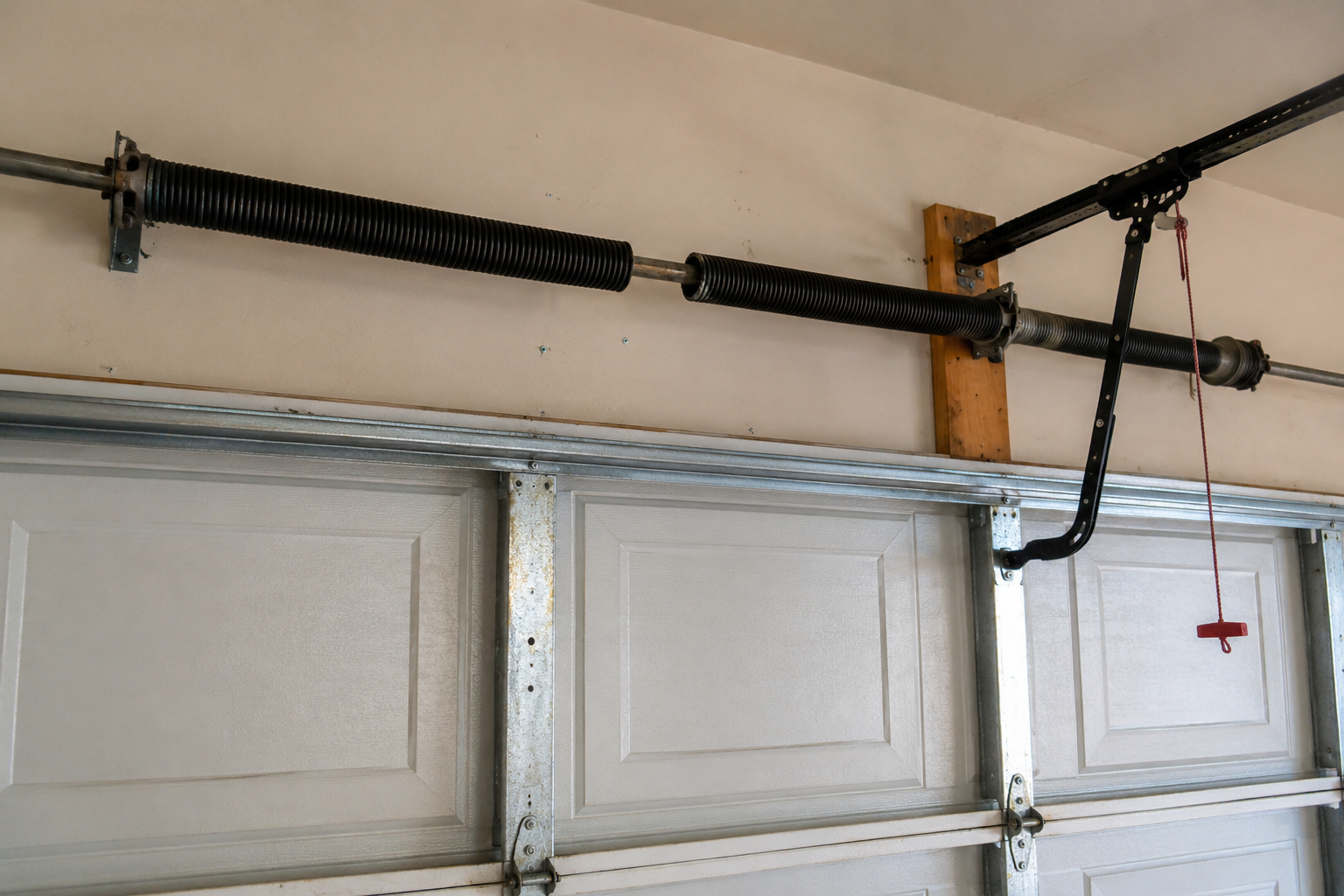
Most of the checklist above is safe DIY territory: rollers, sensor cleaning, sensor alignment, and chain tension adjustments do not involve stored spring tension and can be handled with basic tools. Torsion springs are a different story. If your opener issue traces back to the spring system rather than the rollers or sensors, that is a job for the specialty winding tools built for the job, never a screwdriver or a makeshift bar.
A good rule of thumb: if the fix involves a part you can hold in your hand while the door is stationary, like a roller, sensor, or chain tensioner, it is generally safe DIY work. If the fix involves anything under tension, stop and use the right tool for it. Renting the correct winding bar for your spring size costs far less than a trip to buy one you will use once, and it keeps you safer while you work.
Frequently Asked Questions
Why does my garage door opener struggle more in the summer than in the winter?
Heat and humidity change how metal and rubber components behave. Rollers lose lubrication faster, belts dry out, and swelling in wood door panels adds extra resistance, all of which force the motor to work harder.
Can humidity really cause my garage door sensors to malfunction?
Yes. Condensation on the sensor lenses scatters the infrared beam, and heat related expansion in the mounting brackets can shift sensor alignment just enough to break the connection. Both issues mimic a broken opener but usually just need a cleaning or a small adjustment.
How often should I check my garage door rollers during the summer?
A quick visual check once a month during peak summer heat is a reasonable habit, especially for doors that face direct afternoon sun.
Is it normal for a chain drive opener to get louder in the summer?
Some extra noise is common if the chain has developed slack from heat expansion, but grinding, slapping, or repeated noise on every cycle usually means the tension needs adjusting or the sprocket has started to wear unevenly.
What is the most common reason a garage door opener stalls in hot weather?
Bound rollers are the most frequent cause, followed closely by sensor misalignment. Both put extra strain on the motor and can make a functioning opener seem like it is failing.
Keep Your Opener Running Strong All Summer
Kansas City heat and humidity put real stress on garage door openers, but most of the parts responsible, rollers, sensors, and drive chains, are things a homeowner can inspect and replace without professional help. Catching a worn roller or a foggy sensor lens early keeps the motor from working harder than it should.
U-Install Garage Doors stocks the rollers, sensor kits, and drive hardware Kansas City metro homeowners need to handle these summer fixes themselves, along with the specialty tools required for anything involving spring tension. Call
(816) 745-1372
today to find the right part for your opener before the August heat pushes it any harder.
Recent Posts