5 Garage Door Parts That Wear Out Faster in the KC Metro
If your garage door has been acting up lately, the KC Metro's weather is likely a big part of why. Between the punishing summer humidity, hard winter freezes, and the wind that barrels in off the Great Plains, garage door parts here take a beating that most "universal" replacement parts simply aren't built to handle. The good news? Most of these failures follow a predictable pattern. Know which parts go first, and you can stay ahead of a breakdown before your car ends up trapped inside.
Here are the five parts that wear out fastest in Kansas City homes, why they fail, and what to do about it.
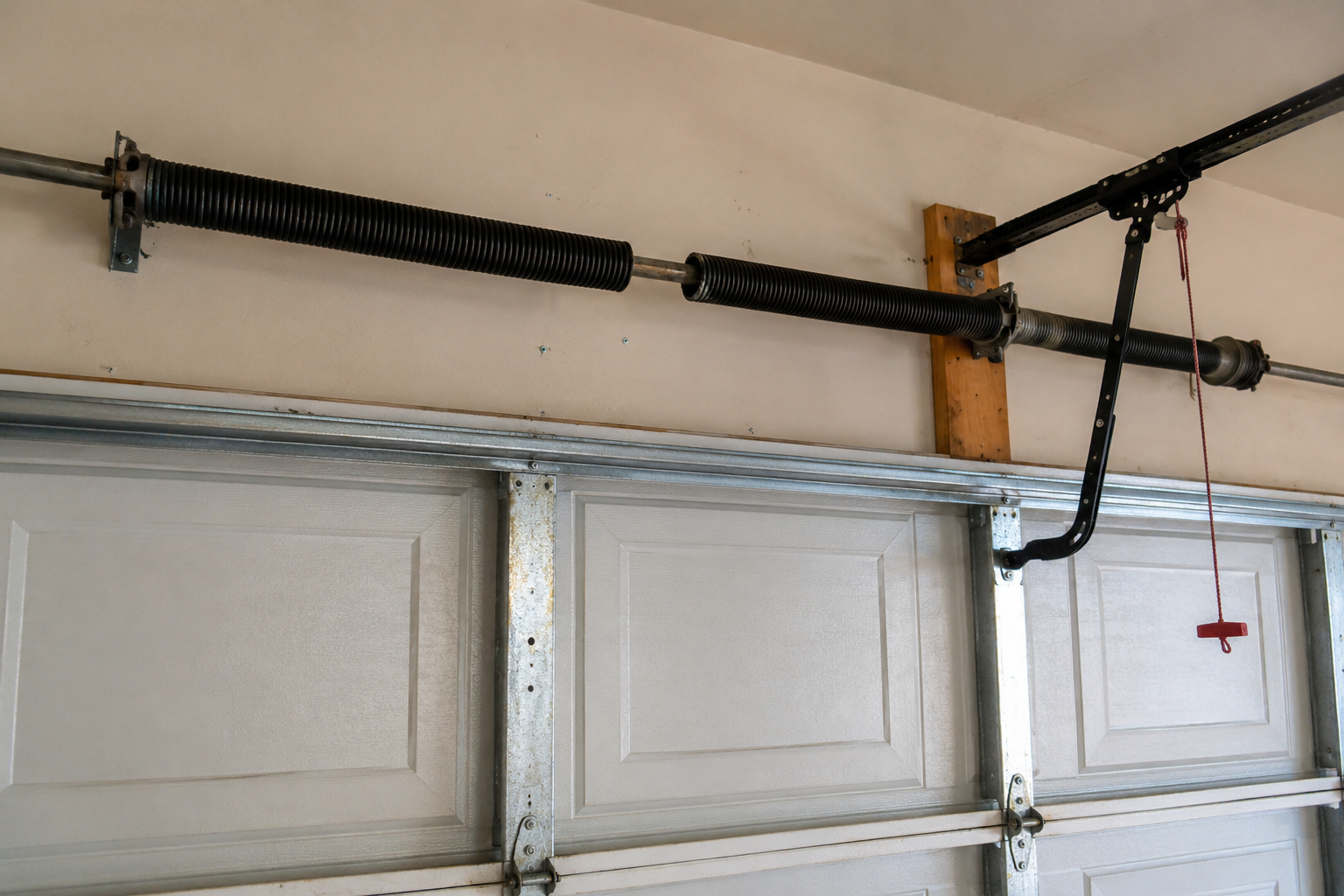
1. Are Your Torsion Springs Rated for Kansas City Weather?
Torsion springs are the single most stressed component on any garage door. They carry the full weight of the door every time it moves, and a standard residential door goes through roughly 4 to 10 cycles per day. Over a year, that adds up fast.
In the KC Metro, there's an extra factor that accelerates spring failure: temperature swing. Kansas City regularly sees a 90°F range between its coldest winter days and hottest summer days. Metal expands and contracts with every shift in temperature, and a spring that's already under tension goes through this cycle repeatedly. Lower-quality springs made from standard carbon steel corrode faster in our humidity and lose their tension tolerance sooner.
What to watch for: A broken torsion spring usually announces itself with a loud bang from the garage, followed by a door that won't open more than a few inches. If your door feels unusually heavy or one side dips lower than the other, the spring tension is off and it's time to inspect.
The insider tip: Always replace torsion springs in pairs, even if only one has broken. The surviving spring has gone through the same number of cycles and is likely just as worn. Replacing one and leaving the other buys you weeks at most before you're dealing with the same problem again.
When it comes to spring work, safety is non-negotiable. A loaded torsion spring stores an enormous amount of energy. Rule #1 from ourDIY Safety guidelines is clear: use the right tools. Never use a screwdriver or rebar to wind a spring. Our
tool rental program exists precisely for this, giving you access to professional-grade winding bars so you can do the job correctly without the risk.
2. Why Rollers Degrade Faster Than You'd Expect
Most homeowners don't think about their garage door rollers until the door starts grinding, squealing, or shaking on its way up. By that point, the rollers have usually been worn down for a while.
The standard steel rollers that come pre-installed on many doors have a bearing count and steel grade that wasn't designed with Missouri humidity in mind. Moisture gets into the bearings, rust forms, and smooth rotation turns into metal-on-metal grinding. In homes closer to the Missouri River corridor in the KC area, this process happens noticeably faster.
Nylon rollers are the upgrade most people don't know about. They run quieter, don't rust, and handle temperature changes better than steel. They cost more upfront, but a set of 10-ball nylon rollers rated for high-cycle use will outlast two or three sets of builder-grade steel rollers in Kansas City conditions.
What to check: Pull the emergency cord and manually move your door up and down. If you feel resistance, hear grinding, or see the door wobble side to side in the tracks, your rollers need attention. Worn rollers also put extra strain on your opener motor, shortening its lifespan as a side effect.
3. The Part Most People Overlook: Bottom Seals and Weather Stripping
Bottom seals sit at the very bottom of your garage door and take the brunt of everything: direct sun, rain, snow, road salt tracked in from the driveway, and constant contact with the ground every time the door closes.
In Kansas City, the freeze-thaw cycle does the most damage. Water works into small cracks in the seal, freezes, expands, and widens those cracks. After a few winters, most rubber seals are brittle, cracked, and no longer creating an actual barrier. At that point, they're letting in cold air, moisture, insects, and in some cases, water during heavy rain events.
The hidden cost of ignoring this: A failed bottom seal doesn't just mean a drafty garage. Moisture getting under the door can warp wooden door panels over time and create conditions for mold on anything stored near the floor. Replacing a $30 seal on schedule is far more economical than dealing with panel damage later.
T-style vs. bulb-style seals: T-style seals slide into a retainer on the bottom of the door and are generally easier to replace yourself. Bulb-style seals press into a channel and provide a tighter fit but require more precision to install correctly. Knowing which type your door uses before you buy saves a frustrating return trip.
Side weather stripping on the door jambs deserves attention too. Once the foam backing compresses and the vinyl splits, you've lost your air and moisture barrier on the sides of the door as well.
4. Do Your Cables Look This Worn?
Lift cables run from the bottom bracket on each side of the door up to the cable drum near the torsion bar. They're under tension every single cycle, and they wrap and unwrap around a drum hundreds of times per year.
Cables fail in a few different ways. The most dangerous is a sudden snap, which can cause the door to drop rapidly on one side. More commonly, they fray gradually. Individual wire strands start to separate, rust forms at the fraying points, and the cable weakens over time before it finally gives.
In Kansas City garages without climate control, condensation forming on the metal through summer humidity and winter temperature drops accelerates the rusting process on cables significantly. Garages on the east side of the metro, in Independence and Blue Springs, that are exposed to prevailing storm winds can also see faster wear on the hardware side that faces the elements.
The DIY-safe check: With the door fully closed, visually inspect the cables from a safe distance. Look for fraying, kinks, or any strands that have separated from the main body of the cable. If you see any of these signs, don't operate the door until the cable is replaced. A snapped cable under tension is genuinely dangerous.
This is a situation where Rule #2 applies: always assume the spring is loaded. Even with the door closed, the cable system is under tension. Treat it accordingly.
5. Are Your Hinges and Tracks Still Kansas City-Grade?
Hinges and track hardware are easy to ignore because they don't announce their failure loudly. They just gradually make the door noisier, less smooth, and harder on everything connected to them.
Standard builder-grade hinges are typically made from light-gauge stamped steel. On a door that cycles multiple times a day in fluctuating humidity and temperature, these hinges develop slop at the pivot point over time. That slop translates into a door that sways slightly, puts uneven pressure on the tracks, and eventually starts damaging the track itself.
What most people don't realize: A bent track section is rarely the original problem. It's almost always the downstream result of something else, usually worn rollers or loose hinges that allow the door to move off its intended path. Replacing just the track without addressing the hinge wear means you'll be replacing the track again.
The Kansas City Standard for hinges means going with 14-gauge or heavier steel, rated for the wind loads and usage patterns our climate demands. Residential hinges at big-box stores are commonly 18-gauge, which is fine for mild climates and low-cycle doors. For a door in active daily use in a KC home, heavier gauge hardware pays for itself in extended service life.
For homeowners in the Northland, Gladstone, and surrounding areas, track alignment deserves a seasonal check. Cold temperatures cause metal to contract slightly, and tracks that were perfectly aligned in summer can develop small gaps or misalignments by January that get worse with every cycle.
Frequently Asked Questions
How do I know if my garage door parts are rated for Kansas City's wind loads?
Parts sold at most national retailers are spec'd for average conditions across the country, not specifically for the wind exposure Kansas City homes deal with off the plains. Look for springs labeled as oil-tempered and for tracks and struts that specify a wind-load rating. When in doubt, ask before you buy. Getting a part spec'd to your specific door's weight and height is always the right move.
Can I replace garage door springs myself in 2026?

Yes, many homeowners do this successfully, but it requires the right tools and a genuine respect for the tension involved. Using proper winding bars (not improvised substitutes), clearing the area of kids and pets, and stopping if anything feels wrong are the basics. If you get partway through and feel uncertain, stopping is always the right call. Our tool rental program makes sure you have professional-grade equipment for the job.
How often should I inspect my garage door hardware?
A quick visual inspection every three to four months takes about five minutes and can catch problems before they become expensive. Check cables for fraying, look at the bottom seal for cracking, manually cycle the door to listen for grinding, and look at your hinges for any visible rust or wobble. In Kansas City, doing a dedicated check after winter is especially worthwhile.
What's the difference between a standard spring and a high-cycle spring?
Standard residential torsion springs are typically rated for 10,000 cycles, which is roughly seven to ten years for an average household. High-cycle springs are rated for 25,000 to 100,000 cycles and are made from higher-grade wire with tighter tolerances. For doors that see heavy daily use, or for homeowners who want fewer replacements over time, high-cycle springs are worth the additional cost.
Is it worth replacing multiple parts at once?
Generally, yes. If your springs have reached end of life, the cables and rollers have likely gone through the same number of cycles and are near the end of their service life too. Doing a full hardware refresh at once costs less than making multiple separate repair trips and means everything starts fresh on the same cycle count.
Staying Ahead of Garage Door Repairs in Kansas City
The parts that wear out fastest in the KC Metro aren't random. They're the ones most exposed to the combination of wind, humidity, temperature swings, and daily mechanical stress that Kansas City delivers year-round. Torsion springs, rollers, bottom seals, cables, and hinges each have a lifespan, and knowing what to watch for means you catch problems before a breakdown catches you.
At
U-Install Garage Doors, we stock
professional-grade parts spec'd specifically for Kansas City conditions, not generic inventory designed for the national average. Whether you're replacing a broken spring or doing a full hardware refresh, we can walk you through exactly what your door needs, give you the right parts the first time, and make sure you have the tools to do the job safely. Call us today at (816) 745-1372 and let's figure out what your door actually needs.
Recent Posts